
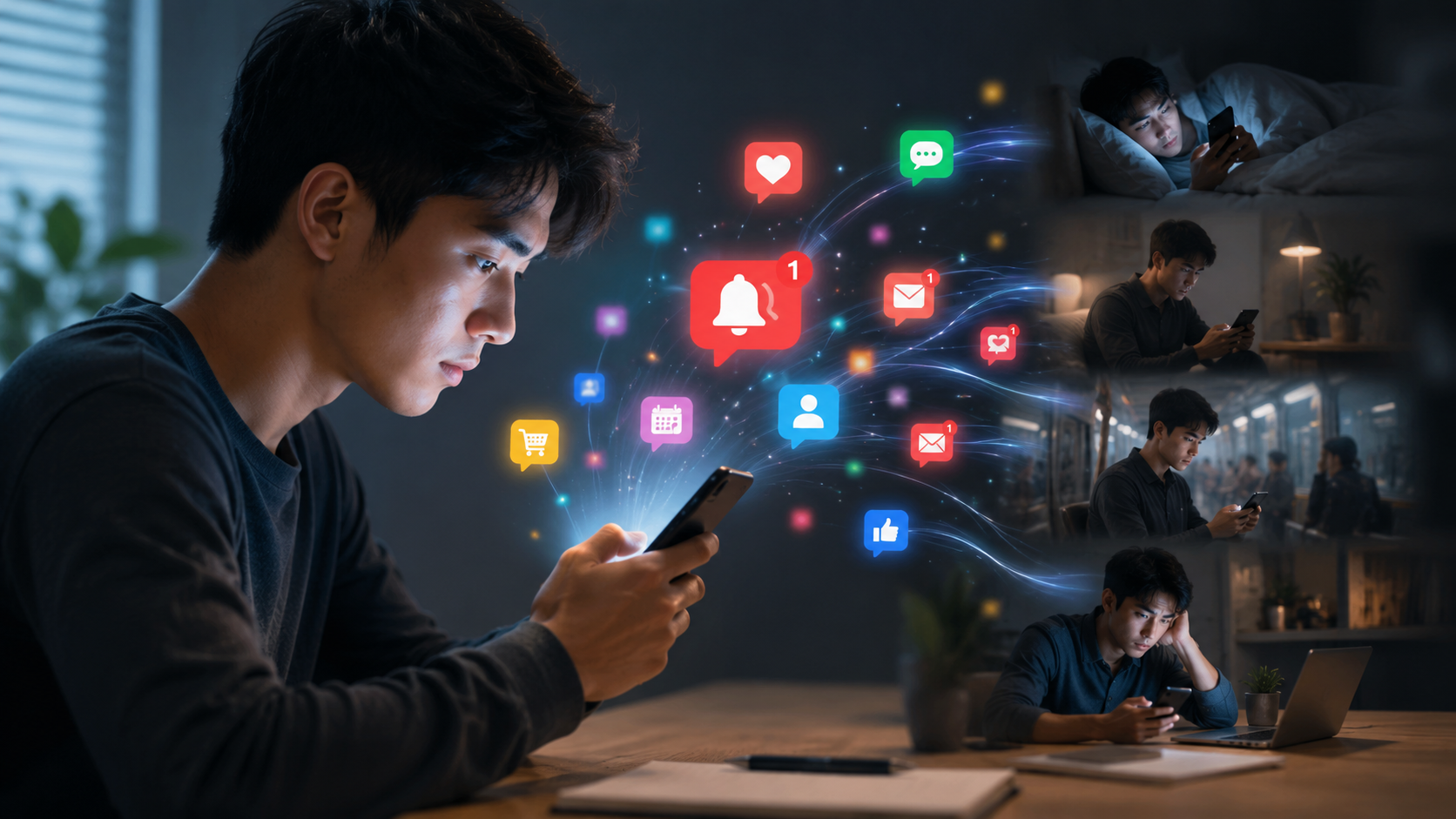
Notifications have become one of the most familiar parts of modern digital life. A short vibration, a sound, or a banner appearing on a screen can seem insignificant. Yet over time, these small interruptions can shape how people use their phones, manage their attention, and interact with digital services.
What makes notifications especially powerful is that they often influence behavior without requiring much conscious thought. People may check a message because they received an alert, open an app after seeing a badge, or briefly look at their phone simply because the screen lit up.
The result is a digital routine that can develop gradually, often without people realizing how much notifications are influencing it.
The Psychology Behind a Simple Notification
A notification creates a small moment of anticipation. It suggests that something has happened and that there may be information worth checking.
Sometimes the notification is genuinely important. It could be a message from a family member, a work update, a delivery notice, or an emergency alert. But many notifications are much less urgent.
Even so, the brain can learn to associate an alert with the possibility of something interesting.
This creates a simple behavioral loop: an alert appears, a person checks the device, and the information provides some kind of response. Repeating this process can make checking the phone feel increasingly automatic.
Over time, people may reach for their devices even before consciously deciding that they want to use them.
Notifications Can Turn Short Checks Into Longer Sessions
One of the less obvious effects of notifications is that they can change the length of digital interactions.
A person might receive an alert from a social media application and intend to spend only a few seconds checking it. Once the application is open, however, other content is immediately available.
A notification can therefore act as the starting point for an entirely different activity.
Instead of checking one message and putting the phone away, a person may read several posts, watch a video, respond to another message, and browse additional content.
The original notification may have required only a few seconds of attention, but the resulting session can last much longer.
The Growing Habit of Checking Without a Notification
Perhaps the most interesting effect happens when people begin checking their devices even when there is no alert.
After repeated exposure to notifications, checking a phone can become part of a routine. Someone might unlock the screen while waiting for an elevator, sitting in traffic, standing in line, or simply experiencing a quiet moment.
At that point, the behavior is no longer completely dependent on an incoming notification.
The expectation of receiving something can be enough to encourage another check.
This helps explain why people sometimes open the same applications repeatedly even when they do not have a specific reason to do so.
Notifications Compete for Attention
Modern smartphones can deliver alerts from messaging apps, email services, social networks, shopping platforms, news applications, financial services, calendars, and countless other tools.
Individually, each notification may appear harmless. Collectively, they can create a steady stream of interruptions.
This matters because attention is limited. Every time someone stops an activity to look at an alert, there is a small switching cost. Returning to the original task may require additional effort.
For people working, studying, reading, or trying to concentrate, frequent interruptions can make digital devices feel more demanding than expected.
The problem is not necessarily one notification. It is the accumulation of dozens of small requests for attention throughout the day.
The Difference Between Useful and Distracting Alerts
Not every notification is a problem.
Some alerts provide real value. A calendar reminder can prevent someone from missing an appointment. A banking alert can help identify unusual activity. A message from an important contact may require an immediate response.
The challenge is distinguishing useful information from unnecessary interruption.
A useful notification answers a simple question: Does knowing this immediately improve my ability to do something?
If the answer is no, the alert may not need to interrupt the current activity.
This distinction can help people rethink the default notification settings that come with their devices and applications.
Why Notification Design Matters
Technology companies understand that notifications can influence engagement. Many digital products use badges, sounds, vibrations, banners, and visual indicators to draw attention toward an application.
These design choices can make certain alerts feel more urgent than they actually are.
A red badge showing dozens of unread items, for example, can create a sense that something needs to be resolved. Even when the underlying information is not important, the visual signal can encourage users to open the application.
This is one reason notification design deserves more attention. The interface is not simply displaying information; it is also influencing when and how users interact with that information.
Taking Back Control of Notifications
The good news is that people do not have to accept every notification as equally important.
One of the simplest changes is to review notification settings and disable alerts that rarely provide meaningful value. Non-essential social media, shopping, promotional, and entertainment notifications can often be reduced without affecting important communication.
Another useful approach is grouping notifications. Instead of allowing applications to interrupt throughout the day, users can choose to review certain updates at specific times.
Keeping important alerts while reducing unnecessary ones can create a quieter digital environment without requiring someone to completely disconnect from technology.
A More Intentional Digital Routine
The goal does not have to be eliminating notifications altogether.
Instead, it can be about making notifications serve the user rather than constantly competing for the user’s attention.
A smartphone is designed to make information available quickly. But constant availability does not necessarily mean constant access is beneficial.
When people become more aware of how notifications influence their habits, they can make more deliberate choices about when to check messages, when to focus, and when to leave the phone untouched.
The smallest changes can sometimes have the biggest effect. Turning off a few unnecessary alerts may reduce dozens of interruptions over the course of a week. More importantly, it can help break the automatic connection between every digital signal and an immediate response.
The Quiet Influence of Everyday Alerts
Notifications rarely feel like major forces shaping behavior. They are small, ordinary features that appear throughout the day.
Yet their influence can accumulate.
A vibration can trigger a glance. A glance can become a phone session. Repeated sessions can become a habit. Eventually, checking the phone may become something a person does without even noticing why.
Understanding this process does not mean technology is inherently distracting. It simply highlights the importance of intentional digital design and personal boundaries.
In an increasingly connected world, learning when not to respond may become just as valuable as being able to respond instantly.











Leave a Reply