

Artificial intelligence is becoming part of everyday technology in ways that are easy to overlook.
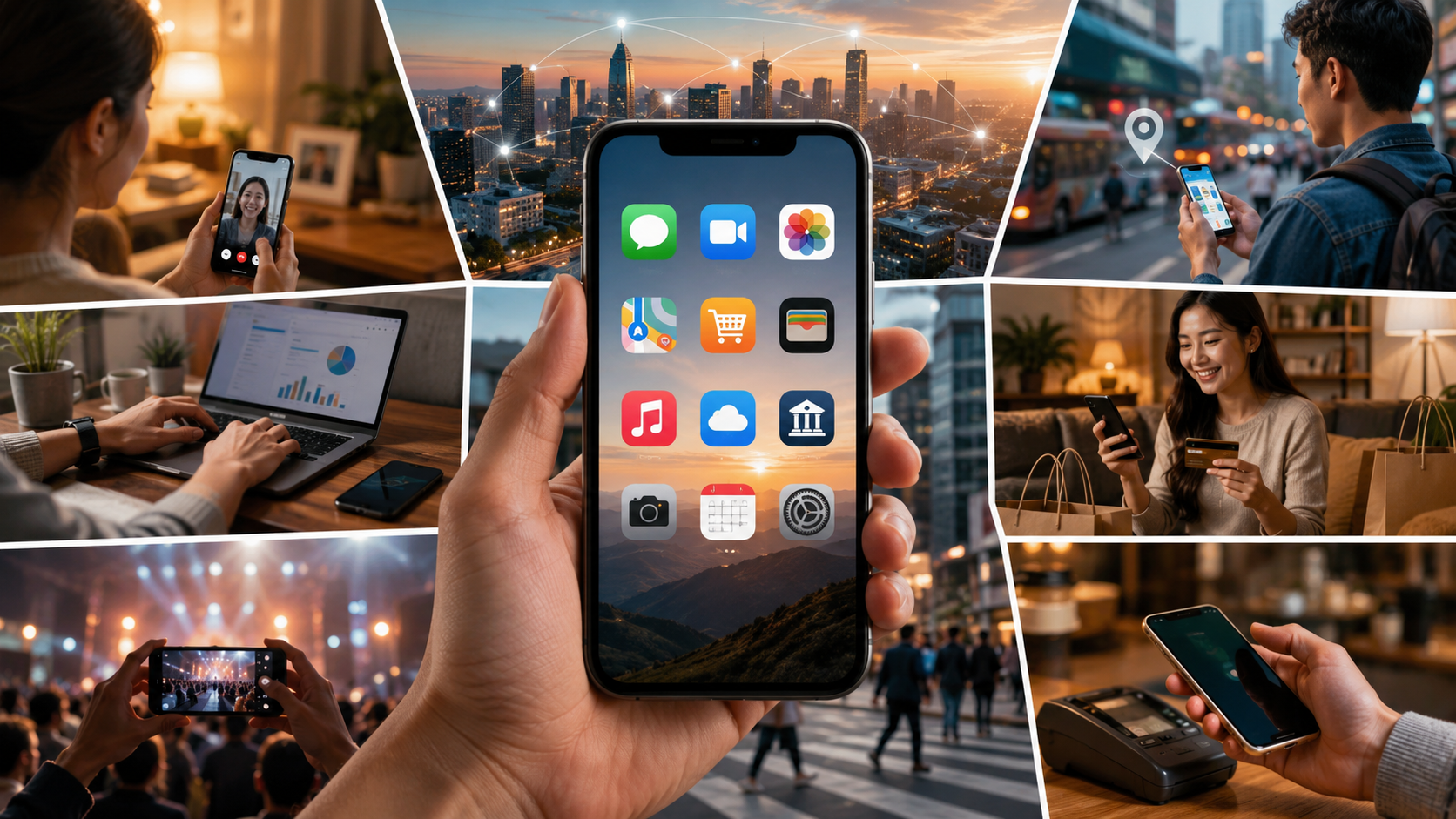
Instead of always appearing as a futuristic robot or a standalone chatbot, AI is increasingly working quietly in the background. It helps people search for information, organize photos, write messages, navigate unfamiliar places, translate languages, and decide what content to watch next.
The result is a subtle but important change in the relationship between people and technology.
In many cases, users no longer need to understand exactly how a digital system works. They simply tell the technology what they want, and artificial intelligence helps determine what happens next.
AI Is Moving From a Feature to an Everyday Layer
For years, artificial intelligence was often viewed as specialized technology used primarily in research, laboratories, and advanced business applications.
That distinction is becoming harder to maintain.
AI is now being integrated into smartphones, search engines, productivity applications, cameras, recommendation systems, customer-service platforms, and countless other digital services.
The interesting part is that many people may be using AI without consciously thinking about it.
A photo application can recognize people and locations. A keyboard can predict the next word in a sentence. A navigation app can analyze traffic and recommend an alternative route. A streaming service can suggest content based on previous viewing habits.
Individually, these features may not seem revolutionary.
Together, however, they represent a major shift in how technology responds to human behavior.
Search Is Becoming More Conversational
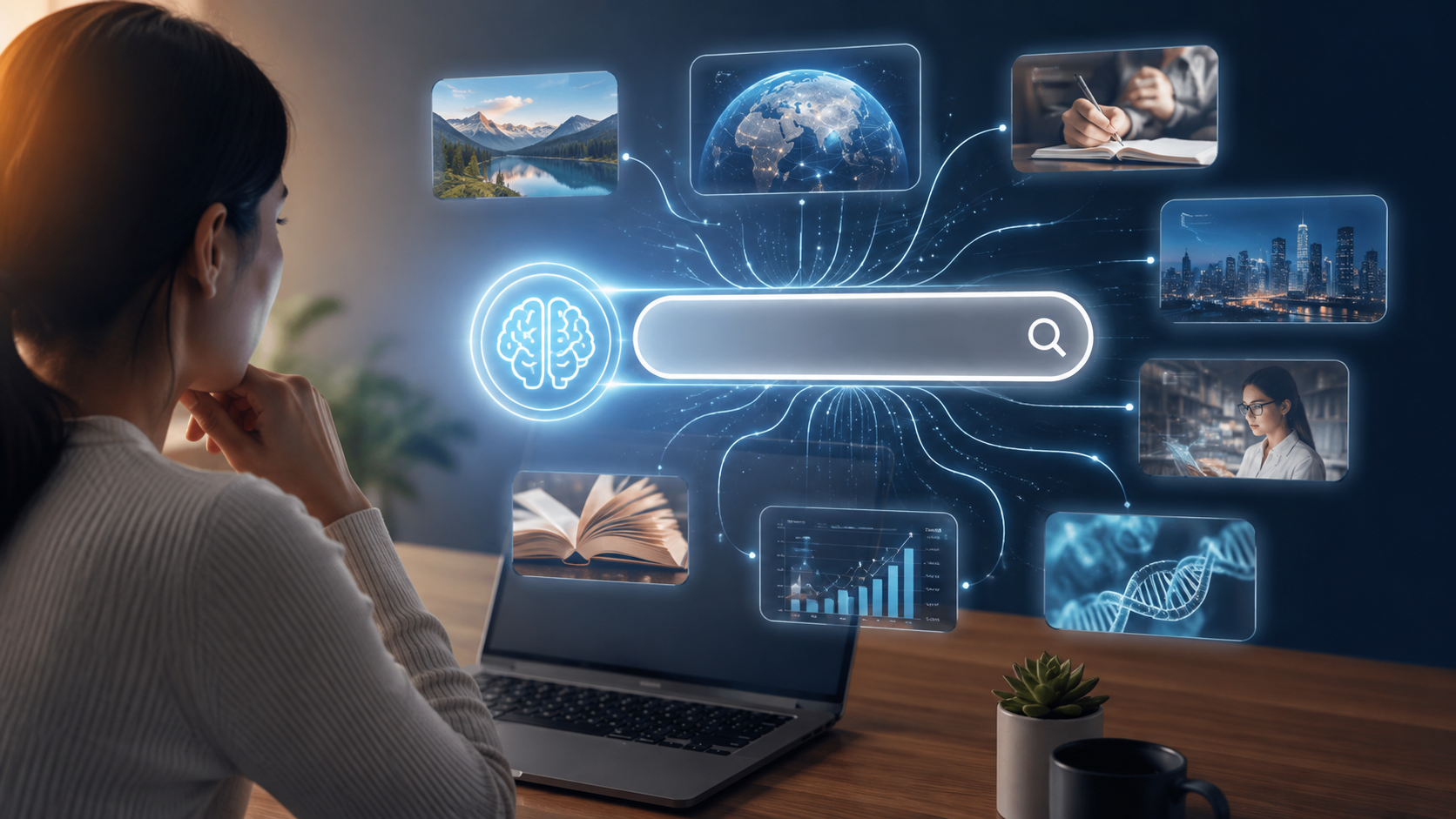
One of the most visible changes is happening in the way people search for information.
Traditional search required users to think about keywords. Someone looking for a solution to a problem might type a short phrase, open several websites, compare information, and decide which answer was most useful.
AI-powered search is making the process more conversational.
Instead of trying to guess which keywords will produce the best results, users can describe a situation in their own words and ask a complete question.
This changes the role of search technology.
The search box is becoming less like a directory and more like an interface for conversation.
That convenience also introduces a new challenge. AI systems can sometimes produce answers that sound convincing even when the information is incomplete or inaccurate.
As AI becomes a more common gateway to information, knowing how to verify important claims will remain an essential digital skill.
People Are Giving Instructions Instead of Learning Every Menu
Another quiet transformation can be seen in the way people interact with software.
Traditional applications often require users to learn where different functions are located. They may have to navigate menus, settings, buttons, and multiple screens to complete a task.
Generative AI introduces another possibility.
Users can simply describe the outcome they want.
They might ask an AI assistant to summarize a lengthy document, rewrite a paragraph, organize notes, generate ideas, analyze information, or create an outline.
Instead of manually controlling every individual function, the user communicates an intention and allows AI to handle part of the process.
Traditional interfaces are unlikely to disappear completely. But natural language is becoming another important interface layer.
People can increasingly communicate with software using ordinary language rather than learning every detail of how the software works.
AI Is Changing What We Expect From Devices
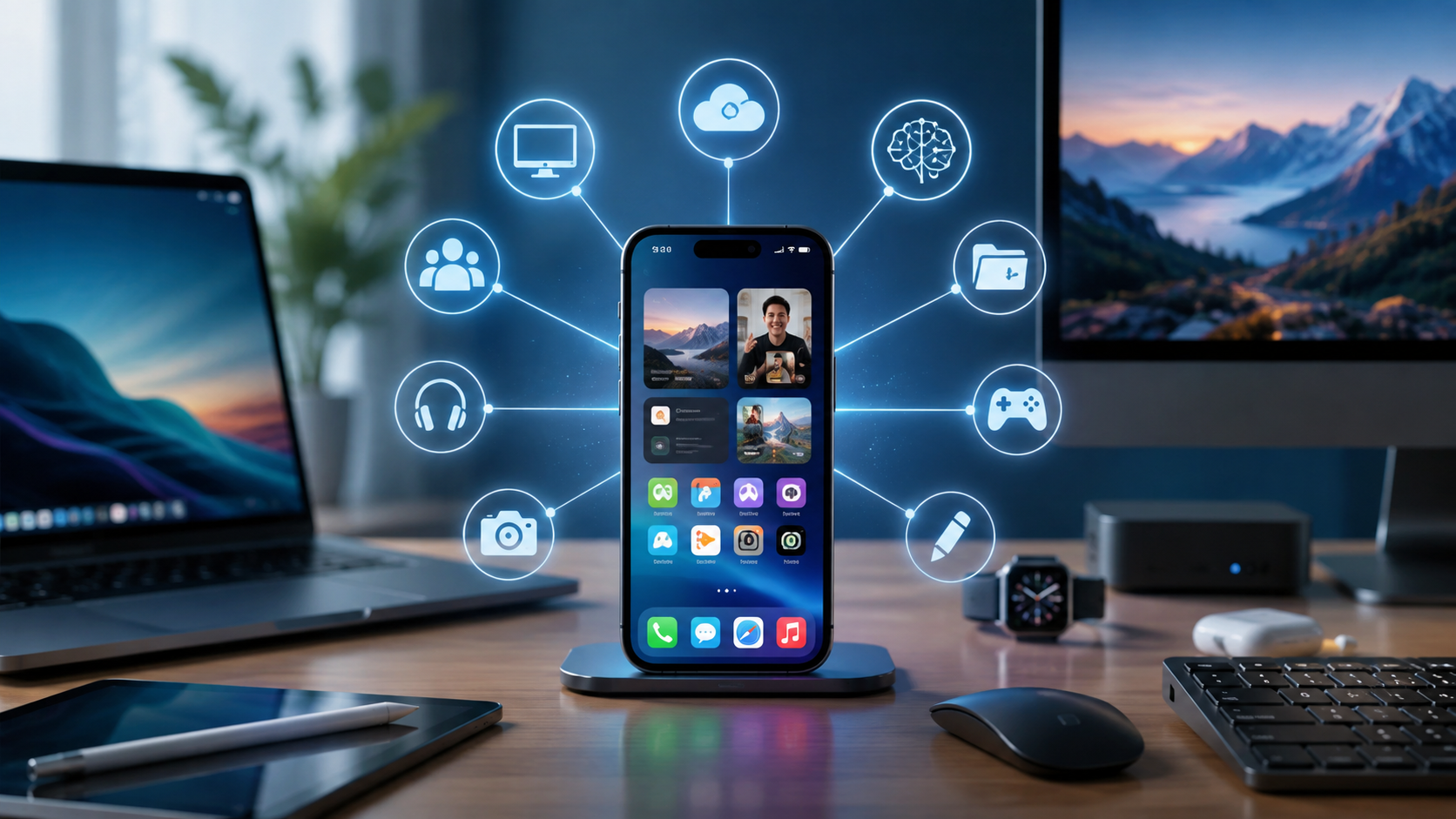
Artificial intelligence is also changing expectations about smartphones, computers, and other connected devices.
For years, consumers primarily compared technology based on specifications such as processing power, storage, display quality, camera performance, and battery life.
Those factors still matter.
But AI capabilities are becoming another part of the technology conversation.
Users increasingly expect devices to understand context, remove unwanted objects from photographs, translate conversations, summarize information, organize content, and provide personalized assistance.
This means technology companies are competing on more than hardware.
They are also competing on how effectively their systems can understand what users are trying to accomplish.
Personalization Is Becoming More Intelligent
Personalization is not a new idea.
Websites and applications have recommended products, songs, videos, and articles for many years.
AI can make those recommendations more dynamic by analyzing large amounts of information and identifying patterns in user behavior.
A music service can better understand listening habits. A shopping platform can recommend products based on previous activity. A video platform can adjust recommendations as viewing behavior changes.
When personalization works well, digital experiences can feel remarkably relevant.
But there is another side to the equation.
The more personalized technology becomes, the more important questions about privacy, data collection, transparency, and user control become.
Convenience and privacy are increasingly connected to the same technological systems.
The Invisible Nature of AI May Be Its Biggest Impact
Perhaps the most interesting part of the current AI transformation is that much of it does not look like science fiction.
There are no robots walking through every office or household.
Instead, artificial intelligence is being added to tools that people already use.
That makes the transformation easy to miss.
An AI feature in a smartphone camera might initially look like a small improvement. An AI writing assistant might seem like nothing more than a productivity tool. An intelligent recommendation system might simply appear to be a better version of an existing feature.
But when similar capabilities become available across search, communication, photography, entertainment, education, and work, their combined effect becomes much more significant.
AI is gradually becoming part of the digital environment itself.
AI Is Changing Digital Habits
Technology does not simply respond to human behavior. It can also change it.
Autocomplete reduced the need to type complete sentences. Smartphones reduced the need to memorize directions. Cloud services reduced dependence on physical storage.
AI could have an equally significant effect on everyday habits.
People may become more comfortable delegating repetitive tasks. They may rely on AI to summarize large amounts of information instead of reading everything from beginning to end. They may use conversational interfaces instead of searching through complicated menus.
The long-term question is therefore not only what AI can do.
It is also what people may eventually stop doing themselves because AI can do it faster or more conveniently.
The New Digital Skill: Knowing How to Work With AI
As artificial intelligence becomes embedded into everyday technology, digital literacy may begin to mean something different.
Knowing how to operate a particular application will still be useful.
But users may increasingly need to understand how to communicate effectively with AI, recognize its limitations, verify information, protect personal data, and decide when human judgment is necessary.
The most valuable skill may not be knowing every feature an AI system offers.
It may be knowing when to trust it, when to question it, and when to take control of a task yourself.
Technology May Become More Proactive
The next stage of AI adoption could be less about spectacular new gadgets and more about making existing technology increasingly responsive.
Search engines may become more conversational.
Software may become more proactive.
Devices may understand context more effectively.
Applications may even anticipate what users need before they explicitly ask.
This could make technology feel simpler on the surface while the systems operating underneath become significantly more sophisticated.
That is one of the paradoxes of artificial intelligence.
The more advanced the technology becomes, the less complicated it may feel to the person using it.
What This Means for Everyday Technology
Artificial intelligence is not necessarily replacing the technology people already use.
In many cases, it is changing how that technology behaves.
A smartphone remains a smartphone, but it can now interpret images, summarize information, translate languages, and assist with tasks.
A search engine remains a search engine, but it can increasingly understand questions expressed in natural language.
A productivity application remains a productivity application, but AI can help users complete tasks without manually navigating every function.
The technology itself may look familiar.
The interaction is what is changing.
Conclusion
Artificial intelligence is quietly becoming part of the digital environment around us.
From search engines and smartphones to personalization and productivity, AI is influencing how people find information, complete tasks, and interact with software.
The transformation may not always feel dramatic because much of it happens behind the scenes.
Yet that may be exactly what makes it so important.
When powerful technology becomes ordinary enough to disappear into everyday habits, its influence can extend far beyond the original feature that introduced it.
The AI revolution may not arrive as one defining moment.
It may happen gradually, through thousands of small interactions that change how people expect technology to work.
And perhaps the biggest shift is already happening: technology is moving from something people operate step by step toward something they increasingly communicate with through questions, instructions, and goals.






Leave a Reply