
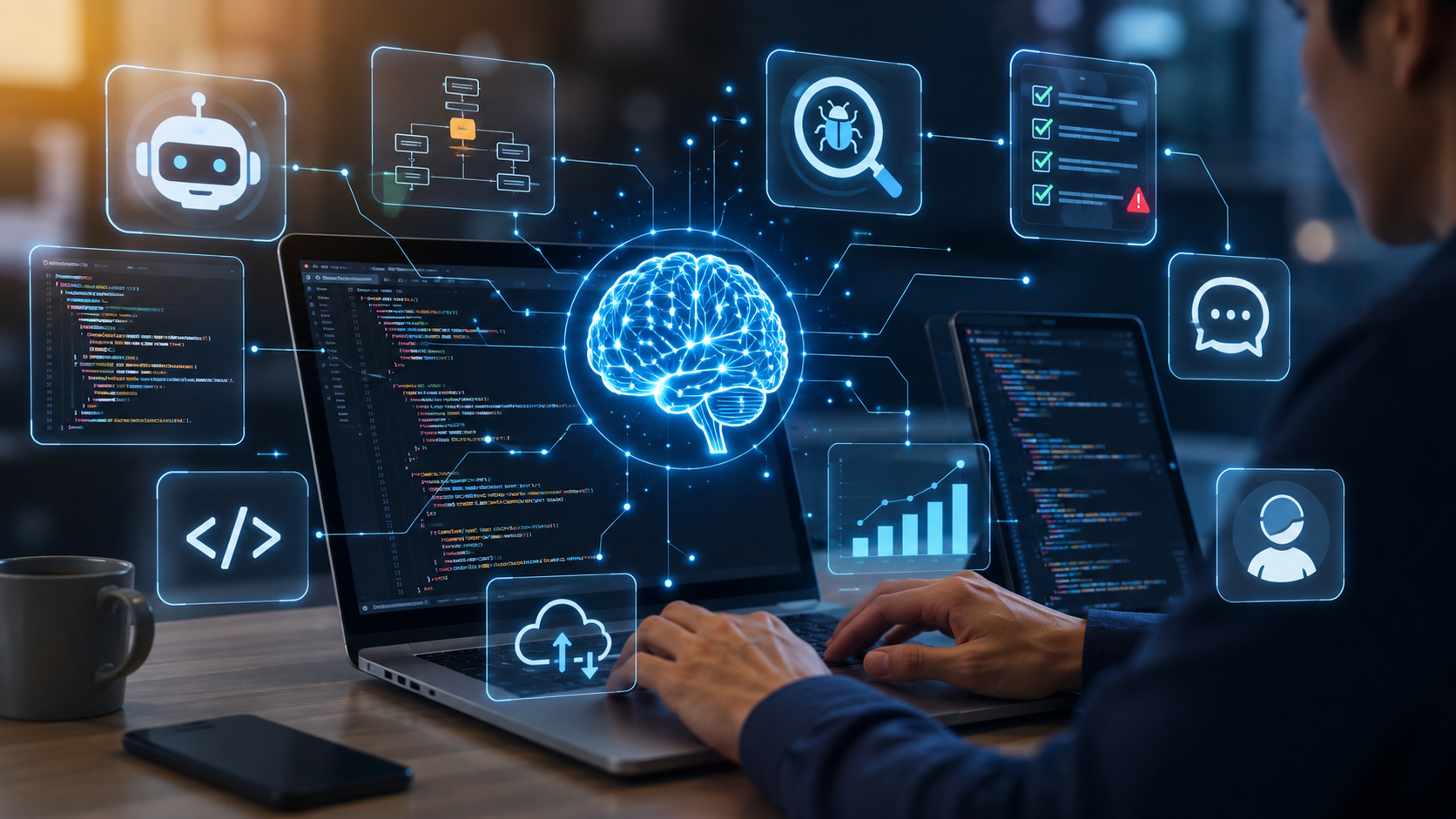
Artificial intelligence is often described as a technology that will transform software development someday. In reality, that transformation is already happening.
AI is quietly changing how software is written, tested, designed, maintained, and even used. While headlines often focus on futuristic AI applications, some of the most important changes are taking place behind the scenes in everyday digital products.
From coding assistants to smarter interfaces, AI is becoming part of the software development process itself.
AI Is Becoming Part of the Development Process
One of the most visible changes is the rise of AI-powered coding tools.
Developers can now describe what they want in ordinary language and receive suggested code, explanations, debugging help, or even complete functions. These tools do not necessarily replace developers. Instead, they can reduce the amount of repetitive work involved in turning an idea into working software.
This changes the role of the developer in subtle ways.
Instead of spending as much time remembering syntax or searching for small implementation details, developers can spend more time deciding what should be built, reviewing generated code, and solving higher-level problems.
The result is a development process that increasingly combines human judgment with machine-generated output.
Software Is Getting Better at Understanding Intent
Traditional software usually depends on precise instructions.
If you click a button, enter a command, or select a menu option, the system responds according to predefined rules. AI is making it possible for software to understand more flexible forms of human intent.
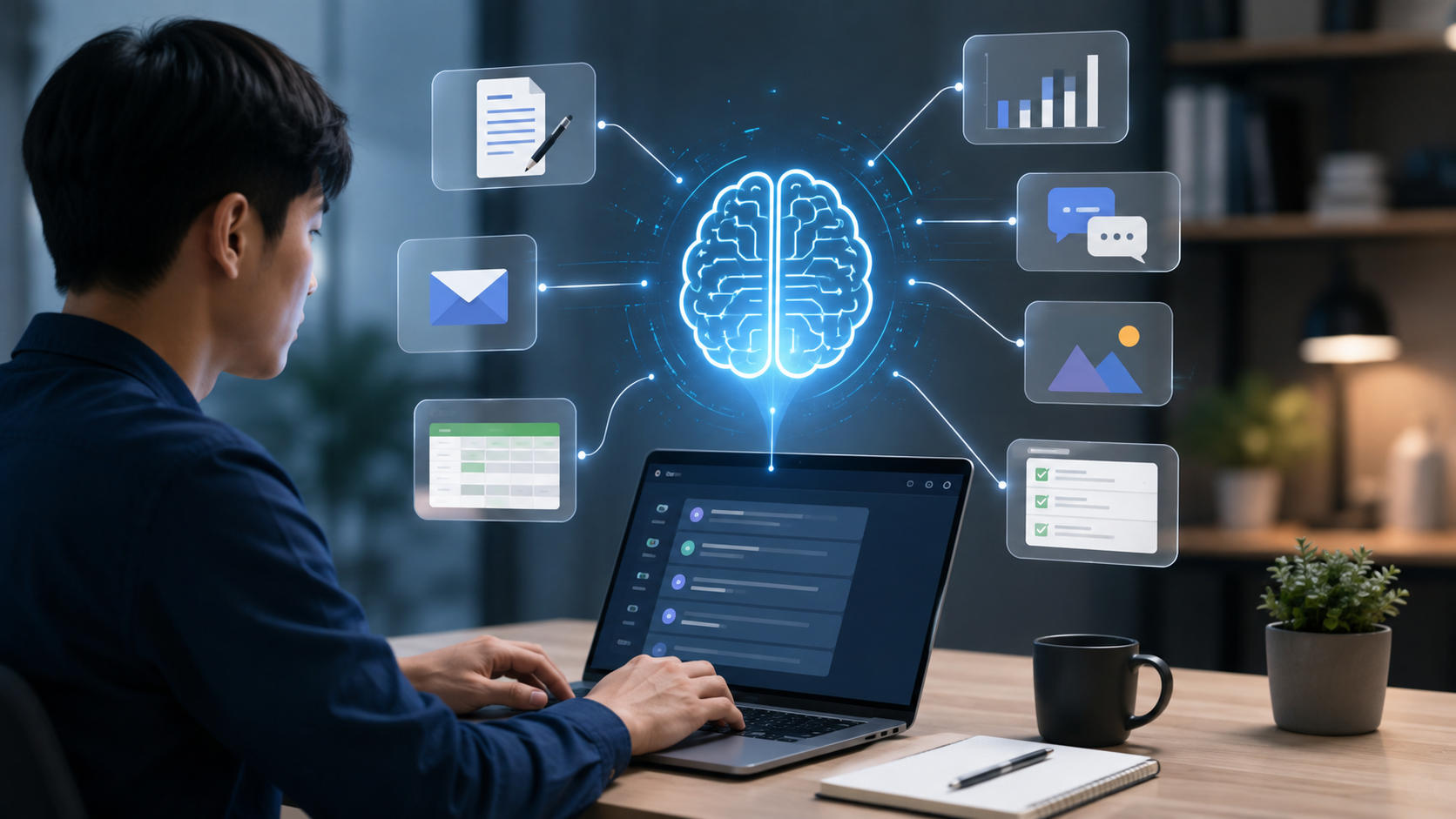
For example, users may be able to describe a task in natural language rather than navigating through several menus. A productivity application might interpret a request such as “organize these notes by project and summarize the important ones” instead of requiring the user to perform each step manually.
This represents a major shift in interface design.
The interface is becoming less about finding the correct button and more about communicating what you want.
AI Is Changing Software Testing
Testing is another area where AI is already making a difference.
Modern software can contain thousands or millions of possible interactions. Finding every potential problem manually is difficult, particularly as applications become more complex.
AI systems can help developers generate test cases, identify unusual behavior, analyze error patterns, and prioritize areas that deserve attention.
This does not eliminate the need for human testers. Instead, it can give testing teams additional tools for discovering problems earlier.
That matters because fixing a software problem before a product reaches users is generally far easier than dealing with the same problem after release.
Debugging Is Becoming More Conversational
Debugging has traditionally required developers to inspect logs, reproduce errors, search documentation, and trace problems through large amounts of code.
AI is introducing a more conversational approach.
A developer can provide an error message or describe unexpected behavior and ask an AI system to explain possible causes. In some environments, AI can examine surrounding code and suggest potential fixes.
The important change is not simply that AI can produce code. It is that software development is becoming more interactive.
Developers can ask questions about their own codebase and receive explanations in a format that is easier to understand than raw documentation or error messages.
AI Is Helping Maintain Older Software
Some of the most valuable applications of AI may involve software that was never designed with AI in mind.
Large organizations often depend on legacy systems that are difficult to modify because the original developers may have left, documentation may be incomplete, or the underlying technology may be decades old.
AI can help explain unfamiliar code, summarize complicated functions, translate between programming languages, and assist developers in understanding how different parts of an older system work.
That could make modernization projects less intimidating.
Instead of completely replacing an old system immediately, companies may be able to use AI to gradually understand, improve, and connect existing software with newer technologies.
Software Development Is Becoming More Accessible
AI is also lowering some of the barriers to creating software.
Someone without extensive programming experience can describe a simple application in natural language and use AI assistance to produce prototypes, scripts, websites, or automation workflows.
That does not mean professional programming skills are becoming irrelevant.
Building reliable software still requires an understanding of security, architecture, performance, data, testing, and user needs. But AI can shorten the distance between having an idea and creating an initial working version.
This could lead to more experimentation.
People who previously abandoned software ideas because development seemed too difficult may now be able to build prototypes and explore their concepts much faster.
The Software Itself Is Becoming More Adaptive
Perhaps the most interesting change is happening inside applications.
Traditional software tends to behave consistently for everyone. AI makes it possible for applications to adapt their behavior based on context, preferences, and previous interactions.
A writing application might adjust suggestions to match a user’s style. A customer service system might change its responses based on the conversation. A business application might highlight information that appears most relevant to a particular employee.
In other words, software is moving from simply executing instructions toward interpreting situations.
That creates new opportunities, but it also introduces new challenges around privacy, accuracy, transparency, and user control.
AI Could Change What We Expect From Software
As AI becomes more common, people’s expectations of software may change.
Users may become less willing to navigate complicated interfaces when they can simply explain what they want. They may expect applications to summarize information, automate routine tasks, and provide useful suggestions without requiring constant manual input.
This could encourage developers to rethink software design from the ground up.
The best application may no longer be the one with the most features. It may be the one that understands what the user is trying to accomplish and removes unnecessary steps.
The Biggest Change May Be Happening Behind the Screen
AI’s impact on software is not limited to futuristic robots or entirely new applications.
It is already appearing in the tools developers use every day, the way bugs are discovered, the way old systems are maintained, and the way users interact with digital products.
The most important transformation may therefore be gradual rather than dramatic.
Software is becoming more conversational, adaptive, automated, and capable of assisting with tasks that previously required significant human effort.
AI may not replace modern software as much as it changes what software is capable of being.
And for many users, that transformation has already begun.









Leave a Reply