
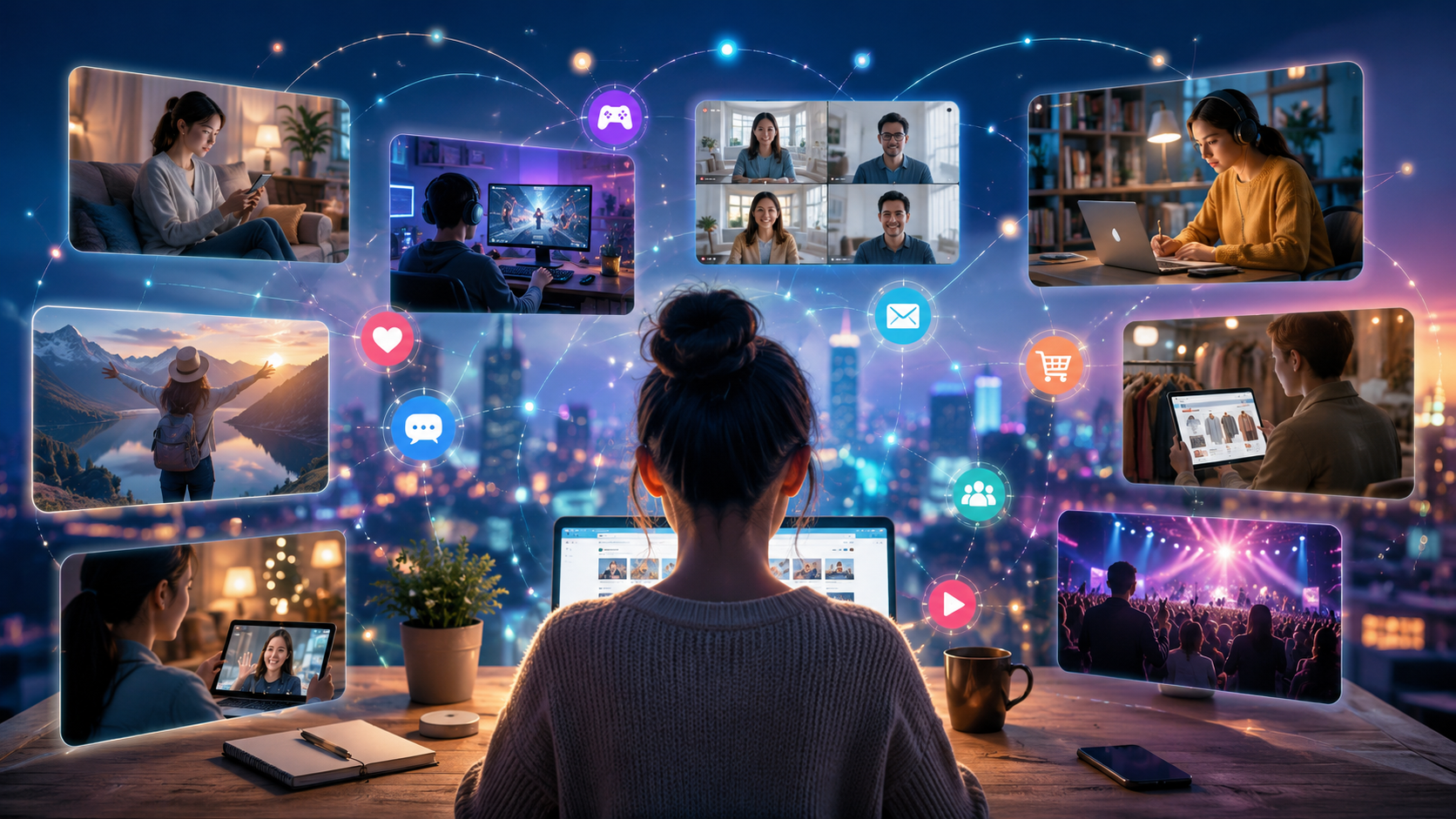
For many people, the internet is no longer simply a place to visit. It has become a space where they work, communicate, shop, learn, relax, create, and maintain relationships.
A growing part of everyday life now takes place through screens and connected devices. People may begin their morning by checking messages, spend hours working inside digital platforms, watch videos during breaks, socialize through online communities, and end the day scrolling through social media or participating in virtual experiences.
The change is easy to overlook because digital spaces have become so ordinary.
But something important is happening. Technology is no longer just a tool people use occasionally. Increasingly, it is becoming an environment in which people spend significant portions of their lives.
Digital Spaces Are Becoming Part of Everyday Life
The idea of a digital space once sounded relatively abstract.
Today, it can refer to almost anything from a social media platform and online game to a virtual meeting room, messaging application, online marketplace, or digital community.
These spaces serve many of the same purposes as physical environments.
People meet friends online. They attend classes through digital platforms. They work with colleagues who may live thousands of miles away. They discover entertainment, discuss interests, build businesses, and participate in communities without sharing the same physical location.
As more activities move online, the boundary between the physical and digital worlds becomes less obvious.
People do not necessarily think of themselves as entering a “digital space” every time they open an application. They simply consider it part of normal life.
Convenience Is One of the Biggest Reasons
One obvious reason people spend more time online is convenience.
Digital services remove many of the limitations associated with physical distance and opening hours.
A person can order food without visiting a restaurant, buy products without going to a store, attend a meeting without traveling, and communicate with someone on another continent almost instantly.
The convenience can be difficult to resist.
When an activity that once required several steps can be completed with a smartphone, people naturally begin to incorporate it into their routines.
Over time, these small conveniences can add up to hours spent inside digital environments.
Social Connections Are Moving Online
Digital spaces have also changed the meaning of social interaction.
Social media, messaging applications, online communities, and multiplayer games allow people to maintain relationships regardless of geography.
For someone living far away from family members or friends, digital communication can make distance feel considerably smaller.
People can share photographs, exchange messages, participate in group conversations, or simply remain present in each other’s daily lives.
Online communities can also connect individuals based on shared interests rather than physical location.
A person interested in a highly specific hobby may struggle to find a large community nearby. Online, that same person can potentially find thousands of others with similar interests.
This creates a powerful reason to return.
A digital space can become not just a source of information, but a place where someone feels connected to other people.
Entertainment Has Become More Immersive
Entertainment is another major factor behind the amount of time people spend online.
Movies, music, games, livestreams, short-form videos, podcasts, and interactive experiences are now available through connected devices.
The difference is that digital entertainment is increasingly personalized.
Platforms can recommend what users might want to watch, listen to, or play next.
That means people do not always have to search for entertainment. The entertainment can come looking for them.
A recommendation appears after a video ends. Another song starts automatically. A new episode becomes available. A notification suggests that someone is livestreaming.
These systems reduce the effort required to find something interesting.
They can also make it easier to remain inside a digital environment longer than originally intended.
Digital Spaces Are Designed to Keep People Engaged
The architecture of many online platforms is built around engagement.
Notifications, recommendations, endless scrolling, personalized feeds, achievements, reactions, and other interactive elements encourage users to continue participating.
This does not necessarily mean every digital platform is deliberately trying to waste people’s time.
However, many online services depend on users returning frequently and spending time within the platform.
As a result, digital environments are often designed to minimize stopping points.
A traditional magazine eventually reaches its final page. A television program has an ending. An online feed can continue almost indefinitely.
That difference can have a significant effect on behavior.
Work Is Becoming a Digital Space Too
The growth of remote and hybrid work has further expanded the role of digital environments.
For many workers, computers are no longer simply tools used to complete certain tasks. They are where meetings happen, documents are created, projects are managed, messages are exchanged, and decisions are discussed.
A workplace can now exist largely through software.
This creates greater flexibility for many people, but it also changes the relationship between work and physical space.
The office may no longer be the primary environment where professional interaction takes place.
Instead, a collection of digital platforms can function as a virtual workplace.
That makes time spent online less about entertainment and more about everyday responsibilities.
Online Identity Is Becoming More Important
Another reason people spend more time in digital spaces is that identity increasingly exists online.
People may maintain profiles, portfolios, professional accounts, gaming identities, creative channels, or online communities that represent different aspects of who they are.
For some, these identities can become almost as meaningful as their physical presence.
An online profile can influence how someone is perceived by friends, colleagues, customers, or broader communities.
As a result, maintaining a digital presence can begin to feel like another form of everyday social participation.
People are not only consuming digital content.
They are creating, responding, sharing, and presenting themselves within digital environments.
Younger Generations Are Growing Up Inside Connected Environments
For younger generations, the distinction between “online life” and “real life” can be less meaningful than it was for previous generations.
They have grown up with smartphones, social platforms, streaming services, online games, and instant messaging.
Digital interaction is not necessarily viewed as a replacement for physical interaction.
It is simply another way of interacting.
A friendship might begin online and later continue in person. A classroom may combine physical lessons with digital platforms. A hobby may involve both physical activities and online communities.
Instead of two separate worlds, the physical and digital environments increasingly overlap.
The Rise of Virtual Experiences
Advances in virtual reality, augmented reality, gaming, and immersive platforms are pushing this development further.
People can now enter environments that are designed specifically for digital interaction.
These experiences can range from virtual meetings and educational simulations to games and social environments.
The technology is still evolving, but the underlying idea is significant.
Digital spaces are becoming capable of providing experiences rather than simply displaying information.
That distinction could influence how people think about the internet in the future.
The internet may increasingly feel less like something people look at and more like somewhere they go.
Why Digital Spaces Can Feel So Comfortable
There is also a psychological element to the growing popularity of digital environments.
Digital spaces can offer control and customization.
People can choose which communities to join, which content to follow, and how much personal information to reveal.
They can communicate at their own pace and sometimes interact without the social pressures associated with physical environments.
For some people, online spaces also provide opportunities to find communities that may not be available locally.
This can make digital environments feel comfortable, familiar, and personally meaningful.
But that comfort can also make it difficult to recognize how much time is being spent there.
The Problem With Always Being Connected
Spending more time in digital spaces is not automatically negative.
The internet has created enormous benefits in communication, education, entertainment, accessibility, and economic opportunity.
The concern arises when digital participation becomes difficult to separate from constant availability.
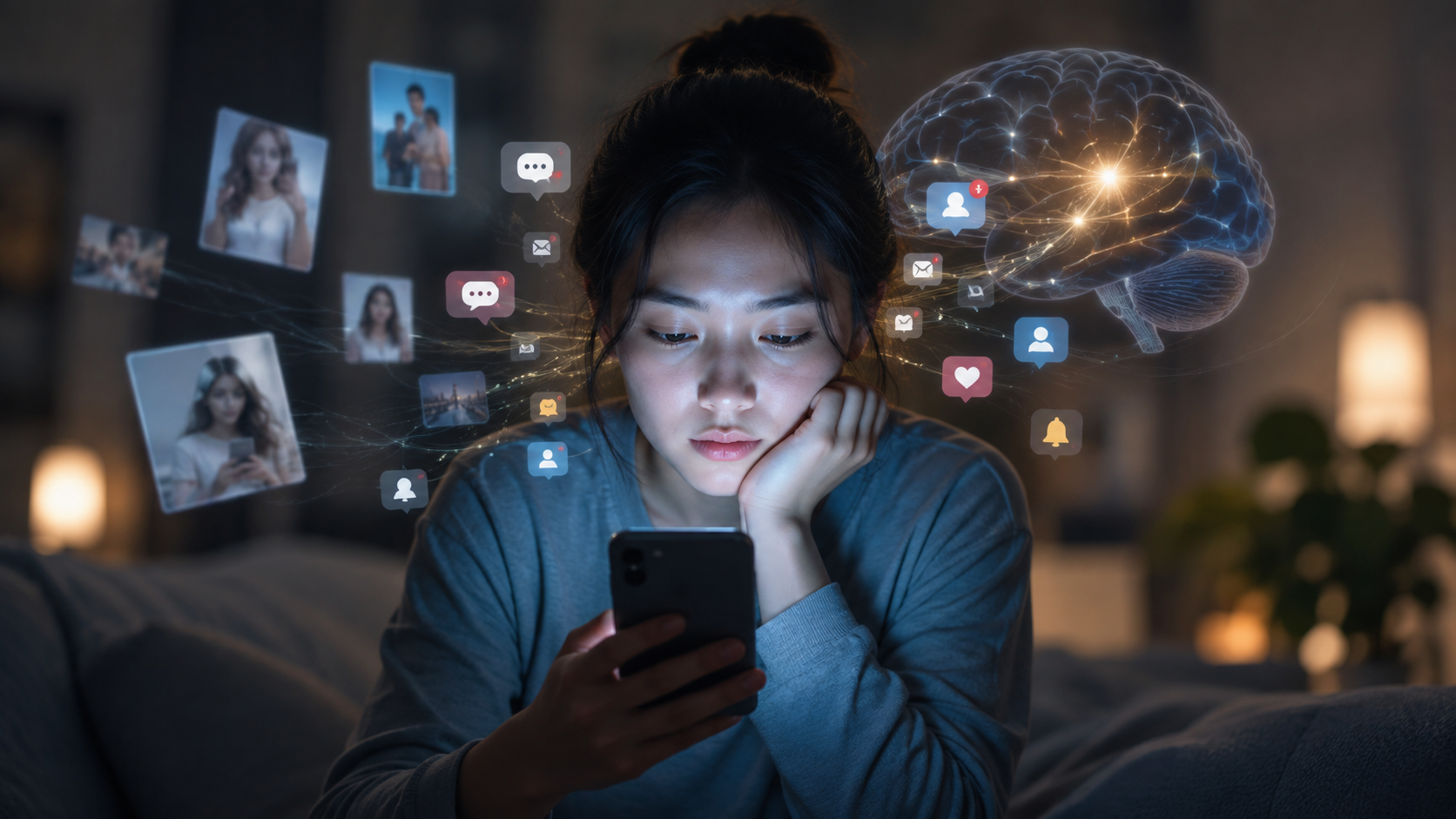
Notifications can follow people throughout the day. Work messages can arrive outside working hours. Social platforms can remain accessible late into the night.
The result can be a feeling that there is never a clear moment when someone is completely offline.
Being connected can be useful.
Being unable to disconnect can be exhausting.
People Are Learning to Balance Two Environments
The growing role of digital spaces does not necessarily mean physical spaces are becoming irrelevant.
Instead, people are learning to move between both.
A person might work online during the day, meet friends in person in the evening, participate in a digital community at night, and use a combination of physical and digital tools throughout the process.
The challenge is finding a balance that allows technology to remain useful without allowing it to dominate every part of daily life.
That balance may become increasingly important as digital environments become more sophisticated.
The Future May Be Less About Going Online
Perhaps the most interesting change is that the concept of “going online” is slowly becoming outdated.
In the past, people might have described themselves as going online when they turned on a computer and connected to the internet.
Today, many people are connected almost continuously.
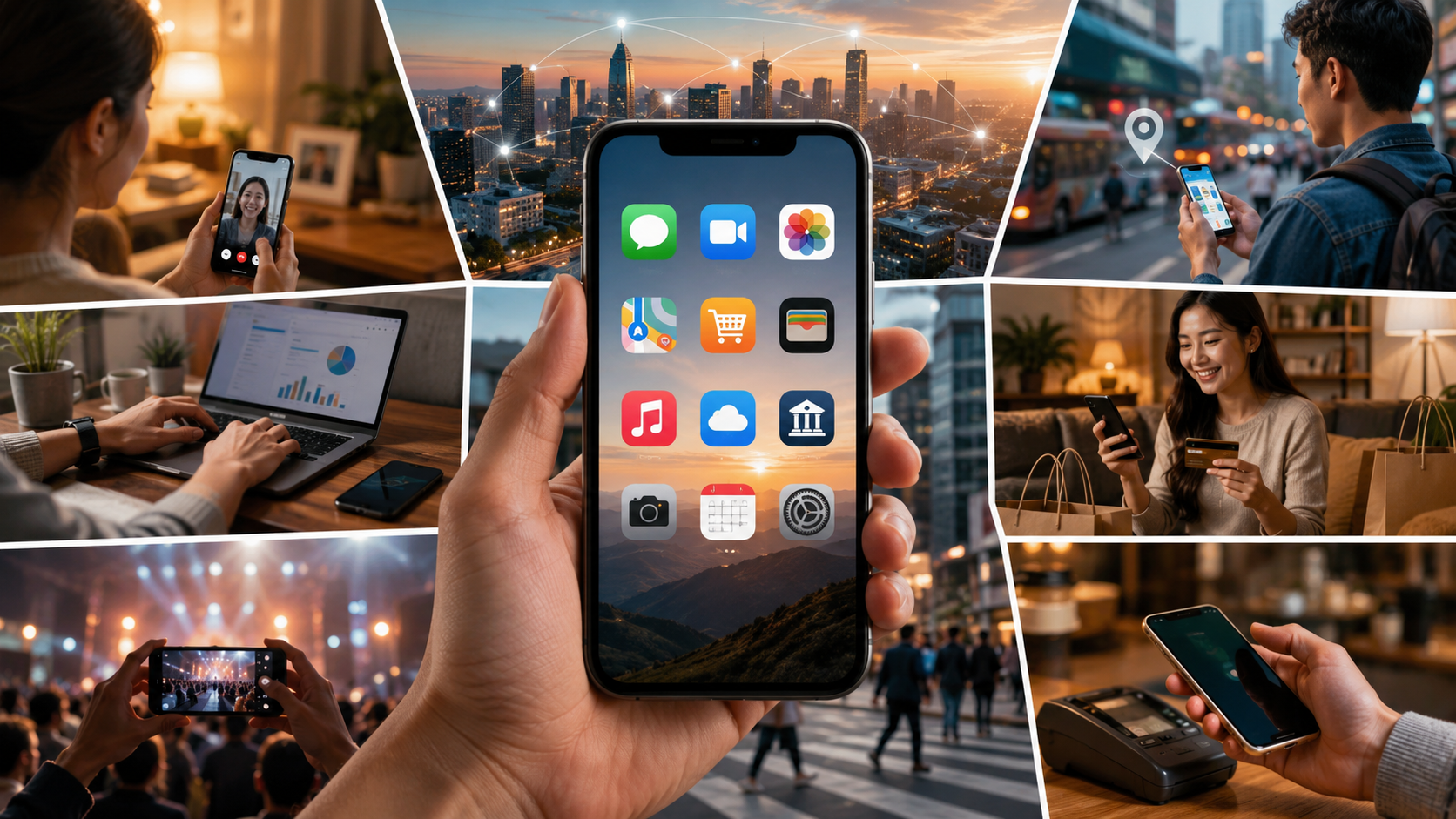
Smartphones, wearable devices, connected vehicles, smart homes, and other technologies can keep digital services available throughout the day.
The internet is no longer necessarily a separate destination.
It is becoming part of the environment around us.
Conclusion
People are spending more time inside digital spaces because those spaces increasingly provide the things people need from everyday life: communication, entertainment, work, education, shopping, creativity, and community.
Convenience is a major factor, but it is only part of the story.
Digital platforms have become more personalized, interactive, social, and immersive. At the same time, many physical activities have moved online, making digital environments difficult to separate from ordinary life.
The result is a gradual transformation rather than a sudden revolution.
People are not necessarily choosing the digital world instead of the physical world.
They are increasingly living across both.
And as technology continues to evolve, the biggest change may be that digital spaces stop feeling like places we visit and start feeling like an ordinary part of where life happens.



Leave a Reply